Project 2: Academy Leader (30%)

Get Wet – Academy Leader Video from Andrea Thiele on Vimeo.

Design Statement:

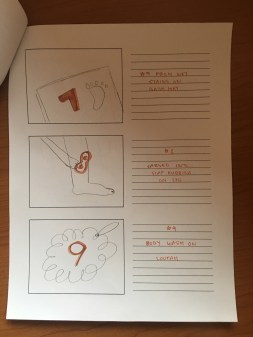
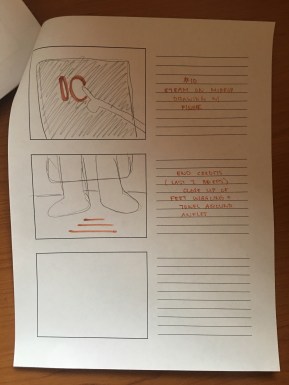
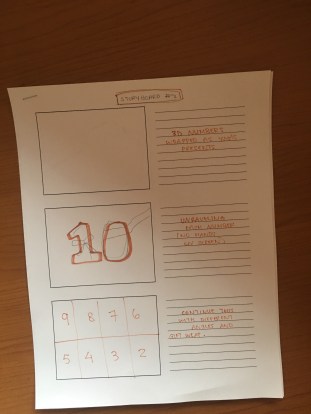
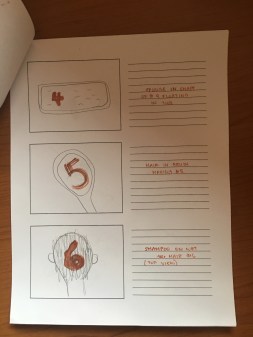
For this final project I decided to continue with my concept sketch which was the theme of water. My very first idea for this project was a bathroom setting, which evolved to water/cleanliness, and then finally ended up being the way in which water is used in a household setting. I was interested in using the camera to look at something we take for granted in our daily lives and examine it through different forms. Water can be fluid or solid, still or full of motion, contained or spilled – and I wanted to capture that through this project.

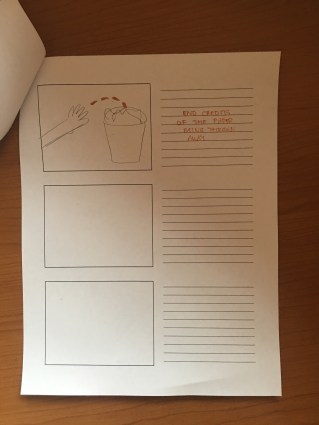
I tried to keep the the numbers consistent (steady, straight and in frame) whereas the background would always change. I took the feedback from critique and borrowed a DSLR to film, as well as framed the number tighter in the square while also maintaining pretty even lighting. Furthermore, I tried to choose angles and subjects that would create contrast so the edges of the number would stay crisp – which was another key point from my critique.  The sound was a drip of water but higher pitched so the audience wouldn’t notice right away and it wouldn’t be redundant to show water while also hearing water. Finally, at the end credits, I threw all the numbers in a full bathtub and let the water wash over them. I did this to bring both the numbers and the subject together, because throughout the video they remained very separate (foreground vs background). I also thought it was interesting watch the cardboard float around in the tub while the water slowly makes it soggy showing the impact both materials make on one another.
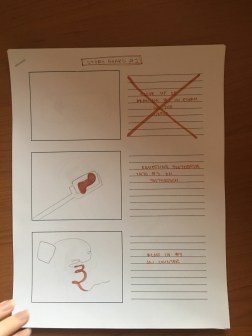
nov 22 2018 journal

I came across this video on YouTube by Peter McKinnon on DSLR camera basics. I do not own a dslr myself, as they are very pricey. I just stick to my iphone 6+ camera. DSLRs can be a bit intimidating, but this video breaks down everything into simple terms and analogies. Peter uses cereal as a metaphor for shutterspeed, milk as the aperture, and a spoon as ISO. One needs all three in order to properly enjoy a bowl of cereal for breakfast. Shutterspeed can stop action, freezing it in time or blur motion depending on what setting its on. Aperture lets light in as well as change what happens in the background. Finally, ISO comes into play in low light situations. The way he explains each term and shows examples of him working with the camera really helped to clear some things up for me.


2 video sketches final proj

countdown water from Andrea Thiele on Vimeo.

First sketch – I wanted to play with a theme behind the numbers, each different but with the material remaining constant. I thought water was broad yet simple enough to play with in many different contexts. I used the square cardboard as a frame along with some editing techniques to keep it in the centre of the frame. Further theme ideas could be: winter/cold, heat/fire.

countdown timelapse from Andrea Thiele on Vimeo.

Second sketch – I thought of the cardboard more like a window in this sketch, showing movement over time. I could not capture the timelapses myself, all are clips from Youtube however I would ofcourse use my own for the final project. This was just to test out my idea. Futher ideas include: out the bus window, my bedroom window, oven, microwave, washing machine.

design journal nov 14 2018

How Horse Sounds Are Made For Movies

I recently came across this video on YouTube where this man, Stefan Fraticelli, creates horse sounds for film. He uses creative techniques to layer sounds that most of us have heard in a movie or two. The video is short – only 3 minutes yet it has gathered over 14 million views. I understand why because (prior to this class) I thought that sound and image where filmed together while creating a major motion picture.

Stefan goes onto say in the video “Something as simple as a body fall can have multiple elements of sound.” I found that very interesting and when listening closely, I could hear each layer of sound being played. This video made me really concentrate on audio and focus my attention to how it can be used. It is not just as simple as letting the microphone record while filming a scene after all. Time, detail and effort have to come together to create a fully immersive audio experience coupled with video imagery to bring the audience into the world you create.

OBJECT Narrative (20%)

Project 01 – Final Video “Scattered”

project 1 from Andrea Thiele on Vimeo.

Design Statement

I used the technique of stop motion to animate my object which was multiple pairs of earbuds. The concept behind this video is tangled thoughts swarming and swirling inside someone’s brain. Then an intrusive, terrible thought (symbolized in red for danger) sneaks its way into the bundle and creates more chaos and anxiety. The audio mimics this feeling to create an overwhelming experience. At the climax of the narrative, theres an exhale and a pause creating a moment of release. The bad thought is let go and the tangles slowly become undone until there is peace and quiet. All of this was on a black background to make a serious atmosphere and also to make the colours pop.

I took the comments from the class and tried to combine the two sketches I did the week prior to make a new narrative and plot. The class seemed to like my integration of audio and visuals from the sketches, but they wanted a more symbolic approach to headphones “tuning out” thoughts rather than playing music.

video sketches

Scattered (first sketch)

video sketch 1 from Andrea Thiele on Vimeo.

I wanted to experiment with stopmotion and the concept of tangled thoughts. While doing this short video I realized it takes a lot more photos to get a seamless stopmotion animation as well as consistent lighting. If I use this concept for my final project I would like to add more layers to the audio to help tell the story as well as more interesting colours to the background. Also I had issues when exporting the file as it made the pictures go very grainy and pixelated so I need to figure out how to fix that. Furthermore, I should have used the full frame but I made the mistake of taking the pictures vertically instead of horizontally.

Remix (second sketch)

video sketch 2 from Andrea Thiele on Vimeo.

I wanted to represent music visually so I decided to use paint and earbuds as a way to show sounds overlapping and creating chaos. I reversed the video and played three royalty free music tracks over each other to represent the three colours. Each song is very different from the others. As the paint starts to separate back into three colours, the music starts to become distinguishable. If I continued with this concept I would want to play with the audio levels more and perhaps use sounds instead of full tracks. The camera work was a bit shaky and out of focus as well so I need to work on that.


design journal oct 23

I recently came across this video on Youtube explaining how Casey Neistat (a famous daily vlogger with millions of subscribers) uses a song in his films. When Casey first started uploading to the site, he revolutionized the way vlogging was done and added his own unique style to the mix. People were blown away by the high quality production and engaging content he provided and tried to emulate him and his work.

I wanted to talk about this video in a journal as we just discussed how to edit sound and visuals together in class. Casey is exceptional at this and often edits using quick cuts to make sure the viewer is never bored while watching. He even cuts while someone is in the middle of a sentence and shows what they were talking about because doing both would be redundant and a waste of video time.

Casey likes to use songs with a heavy beat as he believes that its more important than the lyrics when it comes to using music in a video, as the beat provides pacing that he can use to structure his cuts and narrative with. He combines classic with contemporary sounds for the purpose of being simple and unobtrusive.

OBJECT NARRATIVE part 1

Object: earbuds/headphones

15 words:

  1. music
  2. tangled
  3. mp3
  4. loud
  5. silence
  6. alone
  7. transportation
  8. playlist
  9. lyrics
  10. focus
  11. daydream
  12. concentrate
  13. connected
  14. plug
  15. background

5 renderings:

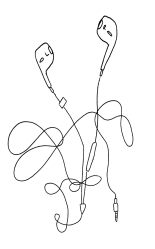
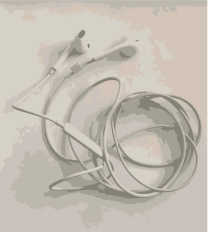
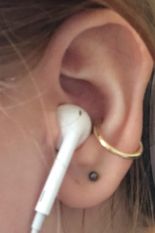
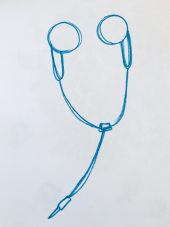
unnamed-1.jpgScreen Shot 2018-10-18 at 1.10.38 PM.pngunnamed-3.jpgunnamed-4.jpgScreen Shot 2018-10-18 at 1.23.49 PM.png

Design Brief:

  • Overview – The object I have chosen are my pair of earbuds that I use everyday on my commute back and forth to university. They are meaningful to me and without them my whole day would drag on longer and be worse in general. Many people feel the same way and they use headphones as a way of tuning out the world. Listening to music through earbuds is a very individual activity, but my concept is to show how this small everyday object connects us all.
  • Key Message – The idea behind this project is that we all are alone in our heads listening to music we like which can be very intimate and personal. I want to showcase how different people use their earbuds in different situations and how it can be an escape/oasis in a dull/mundane moment in life. Using headphones is a shared experience that we do not share but we all know what it feels like.
  • Research – “Headphones originated from the telephone receiver earpiece, and were the only way to listen to electrical audio signals before amplifiers were developed. The first truly successful set was developed in 1910 by Nathaniel Baldwin, who made them by hand in his kitchen and sold them to the United States Navy” (source: History of Headphones, Wikipedia). Apple popularized the earbuds in its viral ad campaigns for the iPod.

download-1.jpgdownload.jpg

  • Inspiration – I am very drawn to the videos shown in class and how The Mercadantes edit their videos in a montage style. The video Breath really inspires me and I like how they focus on human connection in small moments.
  • Content Planning – I think that it should be structured to the flow of a song or the commute from one place to another. As the song ends the person gets to their destination.
  • Aesthetic Treatment – I want closeups of the hands, ears, fingers, and earbuds/headphones without focusing on the person listening to them. Fast cuts to the pace of music or a steady beat with the focus being on the earbuds in centre frame for the most part.
  • Schedule – Oct 23 filming, October 25 editing.

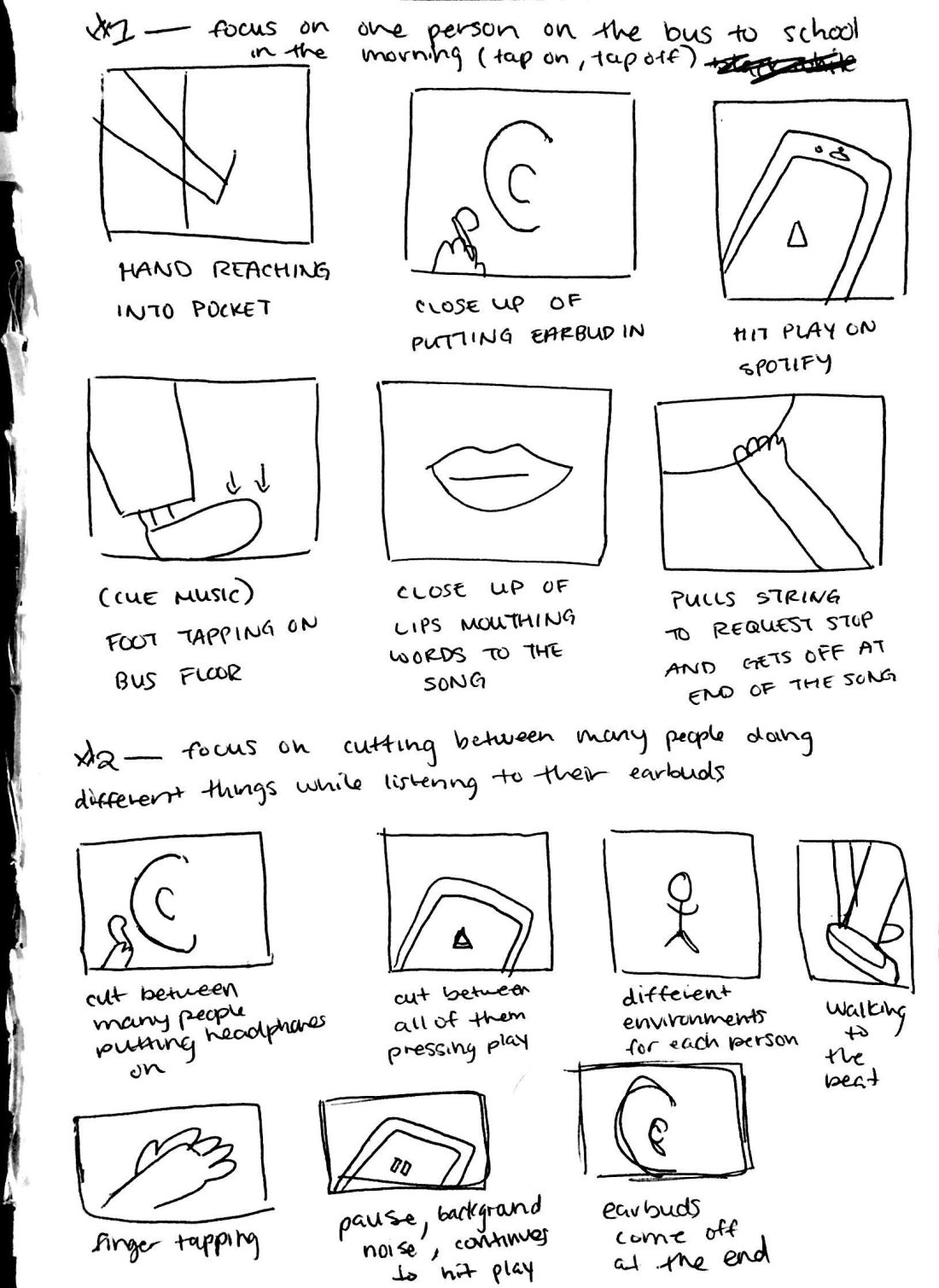
2 Different Storyboards:

unnamed-5.jpg

Visual Analysis Exercise

Subject Video

Colours

  1. Concrete/formal – What it is doing? (visuals, audio, editing, lighting, colour, etc)
    • It is going through different colours, displaying short video clips of subjects that are those colours. Each clip has its own distinct sound, but there is also an underlying music, that the clips transition along with. Similar shapes of the subjects also transition into each other. Colours transitioned into each other intentionally, usually with a scene that had both colours in it
  2. Abstract/conceptual – What do you understand as the underlying ideas?(theme, subjects)  Are there any relationships to other concepts?
    • Theme: colours
    • Subjects: a lot of the subjects were food, but there was also commuting, school, nature, working
    • The video was all very playful, as the video was a celebration of colour in our everyday lives
  3. How do the formal qualities work to communicate the concept?
    • As the music gets faster, the clips of individual subjects are showed quicker, and at the end the music sort of smashes together and then the clips are all of scenes with rainbows
  4. What is the relationship to sound and image for audience understanding?
    • The music is upbeat and puts the audience in a happy mood
    • The clip duration match the tempo
    • Each individual clip also has its own unique but related sound, that contribute to the overall playfulness
  5. Is there anything else you noticed?
    • All of the colours were very vibrant and the video clips high quality

Student Video

A Painter’s Dream

  1. Concrete/formal – What it is doing? (visuals, audio, editing, lighting, colour, etc)
    • There are two canvases, transitioning between different scenes via stop motion, depicting a dream-like landscape or scenario. Dots were paired with laughing voices and zig zags with static noises. It started off light-hearted with cool colours, and changes to darker with mostly red. The music also created a more anxious/scary feeling as the video progressed
  2. Abstract/conceptual – What do you understand as the underlying ideas?(theme, subjects)  Are there any relationships to other concepts?
    • We believe the concept was a dream that progressively turned into a nightmare. It was very abstract, as there were no scenes painted that represented anything from real life, and the sounds were not anything that directly related to each shape
  3. How do the formal qualities work to communicate the concept?
    • The camera is mounted on a tripod which helps the viewer to focus on the stop motion and each frame
    • The paint also starts very thin and watered down and gets thicker as the video gets more intense
  4. What is the relationship to sound and image for audience understanding?
    • Different shapes made different sounds and as the shapes got more jagged and erratic the sounds followed. It conveys the feeling of a nightmare very well
  5. Is there anything else you noticed?
    • The two different canvases create a divider in the frame, allowing there to be two separate images or to break the boundary between with moving paint